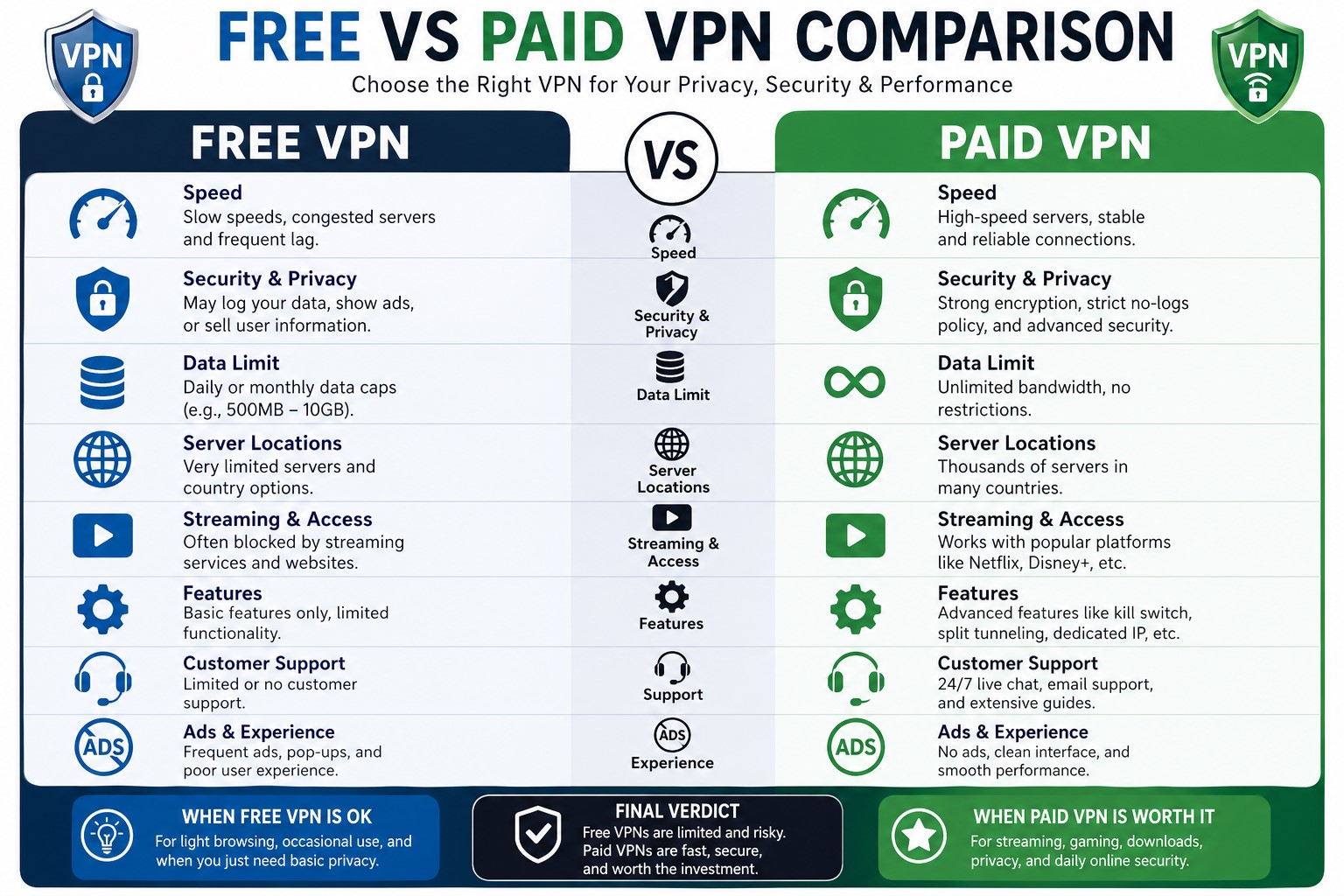
Free vs paid VPN comparison
Introduction
In today’s digital world, online privacy and security have become more important than ever. Whether you are browsing websites, using public Wi-Fi, streaming content, or managing sensitive data, your online activity is constantly exposed to potential risks. This is where VPNs (Virtual Private Networks) come into play.
A VPN helps protect your data by encrypting your internet connection and hiding your IP address. However, when it comes to choosing a VPN, users often face a common dilemma: Should you go for a free VPN or invest in a paid one?
At first glance, free VPNs seem attractive because they cost nothing. But are they really safe and reliable? On the other hand, paid VPNs require money, but do they truly offer better value?
In this detailed guide, we will explore the Free vs Paid VPN comparison in depth, covering performance, security, features, real-world usage, and more. By the end, you will clearly understand which option is best for your needs.
Table of Contents
What is a VPN and Why Do You Need It?
A VPN (Virtual Private Network) creates a secure tunnel between your device and the internet. It encrypts your data and routes it through a remote server, making it difficult for hackers, ISPs, or third parties to track your activity.
Key Benefits of Using a VPN
- Protects your data on public Wi-Fi
- Hides your IP address
- Prevents tracking by advertisers
- Allows access to geo-restricted content
- Enhances overall online privacy
VPNs are widely used for streaming, gaming, secure browsing, and even remote work.
Understanding Free VPNs
Free VPNs are services that allow users to access VPN features without paying any subscription fee. They are often offered by companies as either limited versions of premium services or as standalone free tools.
How Free VPNs Work
Free VPN providers still need to generate revenue. They typically do this through:
- Advertisements
- Data collection and selling user insights
- Offering limited features to encourage upgrades
Some well-known free VPN providers include basic versions of services from companies like Proton VPN and Windscribe.
Understanding Paid VPNs
Paid VPNs are subscription-based services that offer premium features, better performance, and stronger privacy protections. Users pay monthly or yearly fees to access the full service.
Popular paid VPN providers include:
- NordVPN
- ExpressVPN
- Surfshark
These services focus on delivering high-speed connections, advanced security, and reliable performance.
Free vs Paid VPN: Key Differences Explained
1. Speed and Performance
One of the biggest differences between free and paid VPNs is speed.
Free VPNs usually have limited servers and a large number of users sharing those servers. This leads to:
- Slow browsing speeds
- Frequent buffering during streaming
- Lag during gaming
Paid VPNs, on the other hand, invest in high-quality infrastructure. They offer:
- Faster connections
- Dedicated servers
- Optimized performance for streaming and gaming
If speed is important to you, a paid VPN is clearly the better choice.
2. Security and Privacy
Security is the main reason people use VPNs, but not all VPNs provide the same level of protection.
Free VPNs
Some free VPNs:
- Track your browsing activity
- Sell data to third parties
- Use weak encryption
While not all free VPNs are unsafe, many compromise privacy to sustain their business.
Paid VPNs
Paid VPNs typically offer:
- Strong encryption (AES-256)
- Strict no-logs policies
- Advanced security features
This makes them far more reliable for protecting sensitive information.
3. Data Limits and Bandwidth
Free VPNs almost always come with restrictions:
- Daily or monthly data limits (e.g., 500MB–10GB)
- Reduced speeds after limit usage
Paid VPNs provide:
- Unlimited bandwidth
- No restrictions on usage
This makes paid VPNs ideal for streaming, downloading, and heavy internet use.
4. Server Locations and Accessibility
Free VPNs offer very limited server locations. This means:
- Fewer choices for connecting to different countries
- Difficulty accessing geo-blocked content
Paid VPNs provide:
- Hundreds or thousands of servers worldwide
- Better access to global content
For example, accessing platforms like Netflix or Disney+ is much easier with a paid VPN.
5. Streaming and Content Unblocking
Streaming services actively block VPN traffic, especially from free VPN providers.
Free VPNs
- Often blocked by streaming platforms
- Poor video quality due to low speed
Paid VPNs
- Work reliably with major platforms
- Provide HD and 4K streaming support
If your main goal is entertainment, paid VPNs are significantly better.
6. Features and Functionality
Free VPNs are limited in terms of features. They usually offer only basic protection.
Paid VPNs include advanced features like:
- Kill switch (disconnects internet if VPN drops)
- Split tunneling
- Multi-device support
- Dedicated IP addresses
These features enhance both usability and security.
7. Customer Support
Free VPN services rarely provide dedicated customer support. Users often rely on FAQs or community forums.
Paid VPNs offer:
- 24/7 live chat support
- Email assistance
- Detailed guides and tutorials
Reliable support can make a big difference, especially for beginners.
8. Ads and User Experience
Free VPNs often rely on ads for revenue, which can lead to:
- Interruptions during browsing
- Annoying pop-ups
- Slower performance
Paid VPNs offer a clean, ad-free experience, making them more user-friendly.
Real-Life Use Cases: Free vs Paid VPN
When a Free VPN is Enough
A free VPN may be suitable if:
- You need occasional protection
- You are browsing casually
- You want to test VPN functionality
For example, checking emails on public Wi-Fi or accessing basic websites.
When You Should Choose a Paid VPN
A paid VPN is better if you:
- Stream movies or shows regularly
- Play online games
- Handle sensitive data
- Work remotely
- Use public Wi-Fi frequently
In these situations, reliability and security are critical.
Risks Associated with Free VPNs
While some free VPNs are legitimate, many come with hidden risks:
Data Logging and Selling
Some providers track your activity and sell it to advertisers.
Weak Encryption
Poor security can expose your data to hackers.
Malware Risks
Certain free VPN apps may include malicious software.
IP Leaks
Your real IP address may still be visible, defeating the purpose of using a VPN.
These risks make it essential to choose a trustworthy provider.
Cost vs Value: Is a Paid VPN Worth It?
Many users hesitate to pay for a VPN, but the cost is often reasonable compared to the benefits.
Typical Pricing
- Monthly plans: Moderate cost
- Yearly plans: Significant discounts
Value You Get
- Better speed
- Strong security
- Reliable access
- Peace of mind
When you consider the risks of free VPNs, a paid VPN often provides better long-term value.
How to Choose the Right VPN
Whether you choose free or paid, consider the following factors:
Security Features
Look for strong encryption and no-logs policy.
Speed
Check reviews for performance and reliability.
Server Locations
More servers mean better flexibility.
Compatibility
Ensure it works on your devices (mobile, desktop, etc.).
Reputation
Choose well-known and trusted providers.
Common Myths About Free and Paid VPNs
Myth 1: Free VPNs Are Always Safe
Not true. Some are safe, but many compromise privacy.
Myth 2: Paid VPNs Guarantee Complete Anonymity
No VPN can guarantee 100% anonymity, but paid ones offer better protection.
Myth 3: VPNs Are Only for Hackers
VPNs are used by everyday people for privacy and security.
Myth 4: All VPNs Are the Same
There is a huge difference in quality between providers.
Conclusion
The choice between a free and paid VPN ultimately depends on your needs and priorities.
Free VPNs can be useful for light, occasional use, especially if you are just exploring how VPNs work. However, they come with significant limitations in speed, security, and features.
Paid VPNs, on the other hand, offer a complete package: fast performance, strong encryption, reliable access to global content, and a much better overall experience. For anyone serious about privacy, streaming, or secure browsing, investing in a paid VPN is the smarter and safer choice.
In short, if your online safety and performance matter, a paid VPN is worth every rupee.
FAQs
1. Are free VPNs completely safe to use?
Not always. Some free VPNs are safe, but many track user data or provide weak security. Always choose a trusted provider.
2. Can I use a free VPN for streaming?
You can try, but most free VPNs are slow and blocked by streaming platforms, making them unreliable.
3. Is a paid VPN worth the money?
Yes, especially if you value speed, security, and unrestricted internet access.
4. Do VPNs slow down internet speed?
All VPNs may slightly reduce speed, but paid VPNs minimize this impact with better servers.
5. Can a VPN make me completely anonymous online?
No VPN can guarantee complete anonymity, but it significantly improves your privacy.
6. Which is better for beginners: free or paid VPN?
Free VPNs are fine for testing, but beginners will benefit more from the ease and reliability of paid VPNs.
Read More: Top 7 Free Movie Streaming Apps (Legal + Safe) for Unlimited Entertainment Without Subscription
About the Author